Set As Your Home Page
Showing posts with label Hollywood news. Show all posts

Saturday, May 26, 2012

So Long 'Avengers': 'Men in Black 3' Ready to Take Number One

Cinemimi [Saturday, May 26, 2012]
Anyone ever heard of Star Wars, the movie that made $461 million here in the USA? Oh yeah, Marvel's The Avengers (read review) topped it. On Monday.

The ultimate superhero team-up continues to set records as it gathers up dollars in its race to the number one movie of all time — but this weekend, another competitor may finally take down the box office juggernaut. Men in Black 3, mega star Will Smith's return to the big screen (his last film was 2008's little-seen Seven Pounds), hits theaters theaters this weekend and is expected to trounce Iron Man, Captain America, Thor and the rest of the gang in the North American market. Fourteen years after the 1997 original and a decade since the second, but the Men in Black is already a billion dollar worldwide franchise. Hollywood.com Box Office Analyst Paul Dergarabedian predicts the third installment, which reunites Smith with Tommy Lee Jones, while adding Josh Brolin into the mix, will take home around $80 million over the Memorial Day weekend, stealing coveted 3D and IMAX screeners from The Avengers.

But don't feel bad for the superheroic squad. The Avengers will hang on strong in spot number two, with a fourth weekend gross in the $40 million range. Speaking of Star Wars, Avengers passed the fourth highest grossing film of all-time domestically, Star Wars: Episode One – The Phantom Menace on Thursday after just 21 days of release. Dergarabedian also suggests that the movie will hit the half a billion mark by Sunday, after 24 days of release — a new box office speed record.

The presence of Men in Black 3 and The Avengers doesn't leave too much room for the other mega-budget blockbuster floating around the month of May, but Battleship (read review) should still manage a total in the high teens by the end of the long weekend. The movie should continue to add dollars in both domestic and international territories, avoiding the steamroller that is Mr. Smith.

Round out the top five is Sacha Baron Cohen's comedy The Dictator (read review), which should command a total in the low teens and round out its total in the $40 million range, and newcomer Chernobyl Diaries, the latest from Paranormal Activity mastermind Oren Peli. In the vein of the supernatural series, Chernobyl Diaries takes the horror story to Ukraine with an unknown cast and low-budget production values. The movie should scare up around $10 million for a fifth place finish.

What movie will you see this holiday weekend?

[UPDATE: Men in Black 3 took Friday's box office, bringing in $18.0 million for the no. 1 spot. The Avengers came in second with $9.7 and new entry Chernobyl Diaries rounded out the top three on Friday with $3.5 million.]

Hollywood Docket: 'Call of Duty' Trial; 'SYTYCD' Star Vs. Manager; Art Law Overturned

Cinemimi [Saturday, May 26, 2012]
A roundup of the week's news in entertainment law.

Dish Network's big-money litigation with the major TV networks over its new AutoHop commercial-skipper dominated the legal headlines this week, but there were a few other stories worth noting...
The billion-dollar legal dispute between Activision Blizzard and the creators of the mega-selling Call of Duty video game franchise is finally heading to trial. Los Angeles Superior Court Judge Elihu Berle has set June 1 for the start of a 22-day trial to determine whether a three-page agreement Activision signed in 2008 with game developers Jason West and Vincent Zampella, the former heads of the studio that developed Call of Duty, entitles them and other developers to hundreds of millions of dollars in royalties (West and Zampella were fired in 2010). The courtroom proceedings will coincide with the annual E3 video game convention down the street at the LA Convention Center. Perhaps a few game designers will stop by the courthouse to check out the legal gamemanship.

Music lawyers are calling these "Eminem cases": Doobie Brothers singer Michael McDonald has become the latest music figure to sue his label in the wake of the rapper's former production company winning an appeals court ruling against the record company practice of paying artists small royalties for downloads instead of a 50 percent licensing fee. Repped by litigator Richard S. Busch, McDonald sued Warner Music Group in federal court in Nashville, reports Billboard. Busch has filed other suits for Kenny Rogers and Peter Frampton.

So You Think You Can Dance judge Mary Murphy's legal battle with her ex-manager Michael Sanchez is heating up. Sanchez, brother of LA television personality Lauren Sanchez and brother-in-law to WME co-head Patrick Whitesell, was sued in December for allegedly stealing $60,000 from his former client. He fired back this week, according to TMZ, with his own lawsuit claiming Murphy has illegally coached contestants on the Fox show and has showed up drunk and high on cocaine.

California's high-end art world is abuzz with news that the state's controversial Resale Royalty Act of 1976 has been declared unconstitutional by a federal judge. The little-enforced law requires gallery owners and other art re-sellers to pay a slice of purchase prices to the original creator of the art. Judge Jacqueline Nguyen struck down the law last week, the LAT reports, because she believes it attempts to regulate commerce outside the state. In doing so, she dismissed a class-action suit brought last year by artists Chuck Close, Laddie John Dill, the estate of Robert Graham and the Sam Francis foundation against Christie's and Sotheby's auction houses. Artist lawyer Michael Bowse says an appeal is planned, with a possible showdown brewing at the 9th Circuit or even the U.S. Supreme Court.

Thursday, April 26, 2012

Movie buzz: 'Bank' on Armie Hammer

Cinemimi [Thursday April26,2012]
Hollywood newsPhoto credit: Pablo Palacios/ | A screening of the film, "Flags, Feathers and Lies: The Untold New Orleans Story of a Culture Fighting for Survival," takes place on May 2, 2012 at the Cinema Arts Centre in Huntington, the film is produced by Julie Belafonte and directed by Pablo Palacios. Pictured: Young Big Chief (Christian Smith) in " Flags Feathersand Lies"


WHO Armie Hammer

THE MOVIE "Cut Bank"

THE DEAL The star of "J. Edgar" will join an impressive cast that includes Ben Kingsley, John Malkovich, Michael Sheen and Teresa Palmer in this indie film about a man trying to escape a small Montana town frozen in time, Variety reports. The movie, whose script landed on Hollywood's informal "Black List" of best unproduced screenplays in 2009, marks the latest in a string of high-profile roles for Hammer, a scion of the Armand Hammer dynasty. He recently appeared as the handsome prince in "Mirror Mirror" and will play the title role in Disney's upcoming "Lone Ranger," opposite Johnny Depp as Tonto.

WHO Julie Belafonte

THE MOVIE "Flags, Feathers and Lies"

THE DEAL The longtime civil rights activist and ex-wife of Harry Belafonte produced this documentary about the post-Katrina existence of the African-American Mardi Gras Indians in New Orleans' Lower 9th Ward. She and director Pablo Palacios will appear at a screening of the film hosted by filmmaker Warrington Hudlin.

INFO Wednesday at 7:30 p.m. at Cinema Arts Centre, 423 Park Ave., Huntington. Tickets are $13. 631-423-7611; cinemaartscentre.org

THE MOVIE "How to Die in Oregon"

THE DEAL Filmmaker Peter Richardson explores the lives of the terminally ill in this documentary set in the first U.S. state to legalize physician-

assisted suicide. The film won a Grand Jury Award at last year's Sundance Film Festival and will play next week as the last screening in the Port Jefferson Documentary Series. The guest speaker will be Fran Schindler of Final Exit Network, a right-to-die society.

INFO Monday at 7 p.m. at Theatre Three, 412 Main St., Port Jefferson. Tickets are $5. 631-473-5220; gpjac.org

Fast-Frame Hobbit Dangles Prospect of Superior Cinema, But Will Theaters Bite?

Cinemimi [Thursday April26,2012]
Hollywood news
HOLLYWOOD — On a century-old studio lot, a guy juggles oranges as cameras roll, capturing test footage of the flying fruit. Then he tosses a red construction hat into the air, throws a bucket of water toward the camera and pours fizzing cola into a glass.

It might look like the kind of amateur antics featured in Thomas Edison’s 1890 film test Monkeyshines, but the juggler — Red Digital Cinema exec Ted Schilowitz — is performing his modest party tricks to show off the capabilities of his company’s next-generation 3-D movie cameras.

Cameramen film each stunt at the standard 24 frames per second before clicking a button to film a repeat performance at twice the normal rate. Then the bespectacled Schilowitz escorts his visitor into a cavernous soundstage, fires up a computer, and uploads the freshly filmed scenes for a comparison.

It’s here that the mundane demo morphs into something rather remarkable. “The regular footage looks fine until you see how much more there is” in the 48-fps version, Schilowitz points out. “There’s less blur, the colors are brighter, the image is crisper and deeper.”

And that’s just on a computer screen. When Schilowitz flicks off the lights and projects fast-frame-rate aerial demo footage onto a big movie screen, it hits like a knockout punch to the optic nerve — in a good way. Filmed by a helicopter flying over a patch of desert, the video shows grains of sand, flower petals and sparkling beads of dew popping off the screen with such smoothly rendered detail that normal movies suddenly seem blotchy, dull and herky-jerky as a Keystone Kops comedy from a century ago.

Fast-frame footage stands poised to define the future of 3-D movies. Avatar director James Cameron is pushing for higher specs, and Peter Jackson shot his highly anticipated The Hobbit: An Unexpected Journey at double the 24-fps rate that ruled Hollywood for eight decades. When Bilbo Baggins and his Middle Earth pals hit select theaters in December to become history’s first 48-fps 3-D wide release, movie audiences will get a chance to see for themselves why alpha auteurs like Jackson are flipping for fast frame.

Still, widespread acceptance of the new standard is not a slam dunk. In fact, technology that flashes more images per second onto the screen to produce a smoother, crisper cinematic experience has been nixed twice before by Hollywood to save money. Now, thanks to theaters’ ongoing conversion to digital projection, upgrading to fast-frame systems is making the transition easier and far less expensive.

How many theater owners will get behind fast frame? That’s the question unfolding this week as projection vendors roll out their faster-is-better pitch to theater operators meeting in Las Vegas for their annual CinemaCon convention. Warner Bros. screened 10 minutes of The Hobbit footage Tuesday, and Variety reported that not all exhibitors were sold on the 48-fps format’s sharp visuals.

The trade publication quoted one exhibitor who saw the footage: “Some of the closeup shots looked like an old soap opera on TV. But the wide vistas were pretty breathtaking. It will take some getting used to, for sure.”
For Cameron, who plans to shoot his Avatar sequels at either 48 fps or 60 fps to clean up “artifacts” that cause a blurring effect when objects move quickly across the screen, fast frame is the obvious next step.

“People are mired in this dinosaur, last-century frame rate of 24 frames per second, which is not fast enough,” Cameron told Wired in a phone interview.

To demonstrate the point, Cameron’s team arranged a separate test screening at Burbank, California-based Cameron Pace Company, just a few miles north of Red Cinema headquarters. Splitting the screen for an A/B comparison, digital manager Derek Watro freeze-frames dueling 3-D footage of an actor swinging a stick, waving a torch and tossing a ball. Images that would normally appear adequate abruptly look fuzzy by comparison, as if the moviegoer had been wearing glasses with the wrong prescription but now could suddenly see straight.

ArcLight Cinemas Completes Digital Conversion with Christie Solaria Series Projectors; Will Feature High Frame Rate Films Like THE HOBBIT Later This Y

Cinemimi [Thursday April26, 2012]

There are two must-see places that are on my own personal bucket list: the Alamo Drafthouse and the ArcLight Hollywood. When you are stuck with AMC/Regal/Cinemark (essentially the McDonalds of movie theaters), places like the Drafthouse and the ArcLight are welcome beacons of light in an otherwise dim cinematic world. With their recent completion of the digital conversion of all four of their locations (33 auditoriums and 61 screens), ArcLight Cinemas has entered a new era. Facilitated by the Christie Solaris Series 2K/4K digital projectors, ArcLight will be able to feature high frame rate movies, such as Peter Jackson’s The Hobbit, which bows on December 14th of this year. This is my new Mecca. Hit the jump to read the press release.

Here is the press release, chock full of all sorts of technological goodies:

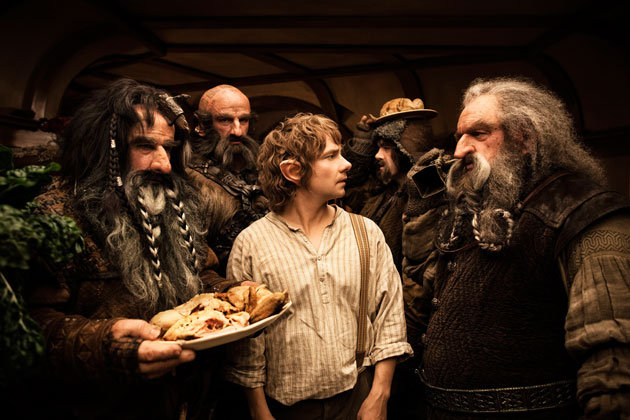
the-hobbit-movie-image-bilbo-food-01CINEMACON/LAS VEGAS – (April 25, 2012) – Christie®, a global leader in digital cinema projection, today announced that ArcLight Cinemas has completed the digital conversion of its four locations in California, boasting 33 auditoriums and 61 screens, with Christie Solaria® Series CP2210 2K, Christie CP4220 and Christie CP4230 4K projectors aligned to provide the best in both conventional and premier movie experiences.

The most advanced offerings in Christie’s industry-leading Solaria Series, the CP4220/30 projectors in particular provide brilliant 3D images in 4K resolution, along with the highest level of content security combined with easy operations and maintenance.

All auditoriums within the ArcLight brand are premium presentation auditoriums, focusing on a “black box” design aesthetic, which emphasizes undistracted viewing and features the best in sight and sound technology.

the-hobbit-image-martin-freeman“Christie’s Solaria series will make it possible for us to present the latest technological advances to our patrons, such as 3D and big-screen experiences, as well as high frame rate (HFR) movies scheduled to launch later this year, beginning with epics such as Peter Jackson’s “The Hobbit,” said Joe Miraglia, director of design, construction and facilities for ArcLight. “Since we offer a range of movies and theaters to suit distinct audiences, we needed digital projection that could adapt to any need, and Christie gave us the best solution.”

The projectors were installed by ACS Enterprises Inc. which chose Christie because of its winning combination of product and support excellence.

“At ACS, we care about our clients, their theaters and their continued success,” said Jose Alvarado, chief executive officer of ACS. “Christie is a partner that shares our philosophy and wanted to make sure we succeeded in our digital cinema transitions. By helping us succeed, they too succeed.

“In addition to providing first-rate technology, Christie collaborated in installation design, setup and testing though its Christie Managed Services group, which has been extremely helpful in quickly and efficiently providing the assistance we needed for ArcLight’s unique requirements,” added Alvarado.

Part of the Pacific Theatres group, the ArcLight chain includes the famous ArcLight Hollywood, which boasts the historic and unique Cinerama Dome – one of only three such theaters in the world today. In keeping with the unique architecture, and to be able to deliver a variety of enhanced movie experiences, the Dome now features
Christie Duo™ technology, a configuration of two projectors, advanced software and a space-saving frame that delivers a completely seamless, premium movie experience for the world’s largest screens.

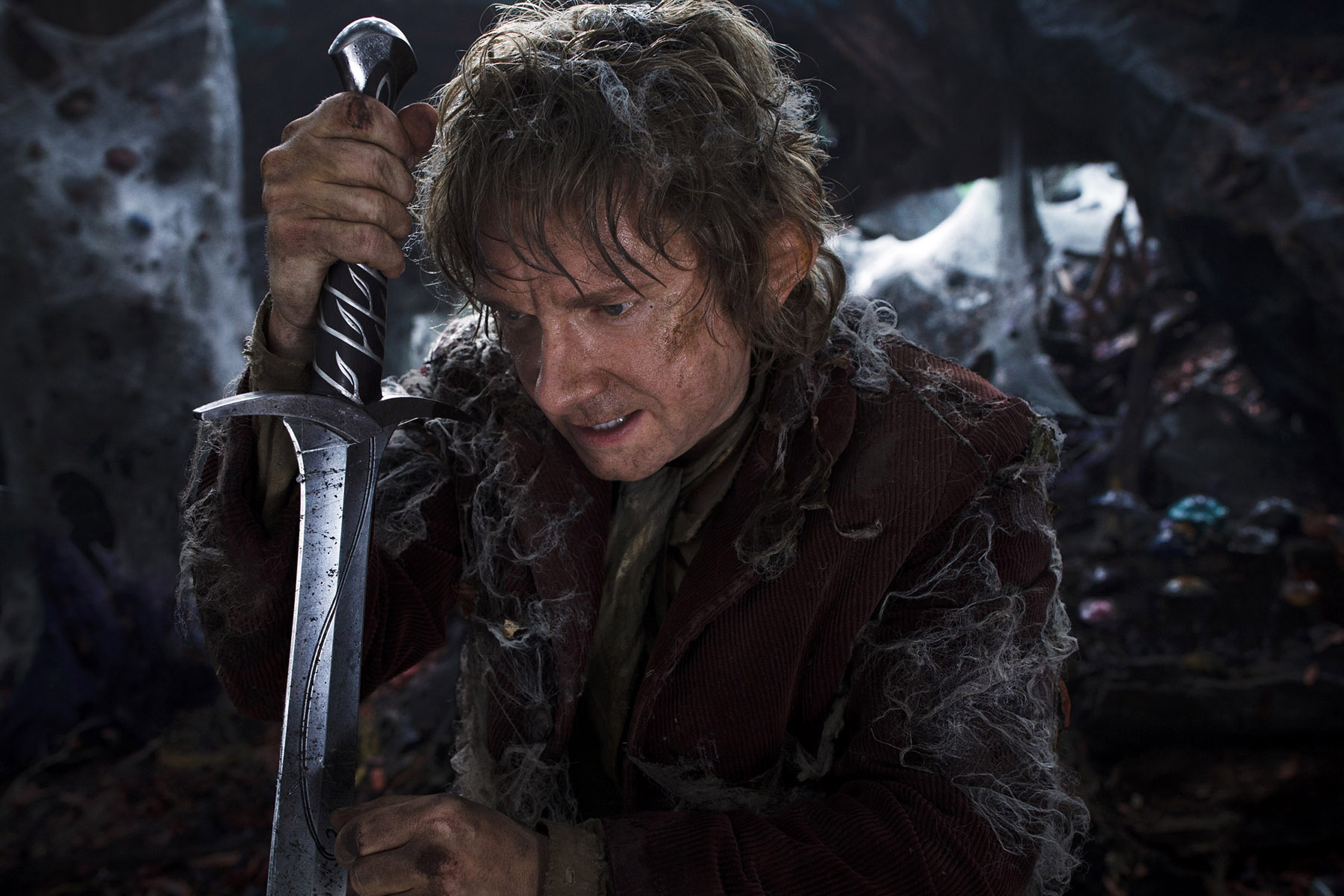
Craig Sholder, vice president, Entertainment Solutions for thorin-oakenshield-the-hobbit-movie-imageChristie, said, “We offer an unparalleled range of leading-edge product, support, partnerships and financing options to make the benefits of digital projection available to all types of exhibitor in every market. It’s because of this commitment, and the loyalty of our customers, that we lead the market for digital projection solutions, and we’re pleased to have ArcLight as part of our customer family.”

ACS looks forward to many successful deployments with Christie, which dovetails with its long-range thinking to benefit clients. “It is part of our continued support cycle to monitor developments in the industry to make sure our clients are aware of the latest technology advances and what motion picture releases will implement/introduce such programs,” said Alvarado. “Our industry experiences have made us recognize that technological advances in motion pictures, with both picture and sound delivery, are usually not successful without the release of a major motion picture that demands these advances. It’s a process we consistently monitor; making sure our clients are in a position to adapt and implement when that picture is released to their patrons.”the-hobbit-an-unexpected-journey-poster

About ArcLight Cinemas
ArcLight Cinemas, created by Pacific Theatres, represents an evolution in the movie going experience. With locations in Hollywood, Sherman Oaks, Pasadena and El Segundo, the chain offers an unprecedented combination of technology, amenities, comfort, and customer service. ArcLight Cinema’s dynamic programming ranges from the newest Hollywood blockbusters to independent art house fare, cult favorites and classics and 21+ screenings, making it one of the most popular destinations for discerning moviegoers. Its signature amenities include black box auditoriums, extra-wide seats with double armrests, stadium seating, reserved seating at many locations and a wide variety of counter and café food options.

Thursday, April 19, 2012

Google Co-Founder Rips Hollywood on Anti-Piracy Efforts

Cinemimi [Thursday, April 19, 2012]
Los Angeles. Hollywood and the entertainment industry are "shooting themselves in the foot, or maybe worse than the foot" by pushing the current anti-piracy legislation, according to Google co-founder Sergey Brin.

He said the Stop Online Piracy Act and the Protect IP Act that Hollywood has been lobbying for would have led to the US using the same technology and approach it has criticized China and Iran for using.

Brin made the comments in an exclusive interview with the UK's Guardian newspaper.

The entertainment industry, he said, is failing to understand that users will continue to download pirated content as long as it is easier to acquire and use than legitimately obtained material.

"I haven't tried it for many years but when you go on a pirate Web site, you choose what you like, it downloads to the device of your choice and it will just work - and then when you have to jump through all these hoops (to buy legitimate content), the walls created are disincentives for people to buy."

Brin's criticism of Hollywood was part of an alarming portrait he painted of the current Internet landscape. He said that the principles of openness and universal access that fostered the creation of the Internet three decades ago are under greater threat than ever.

There are "very powerful forces that have lined up against the open Internet on all sides and around the world. I am more worried than I have been in the past ... it's scary," Brin said.

He said the threat came from a combination of governments increasingly trying to control access by their citizens, the entertainment industry attempting to crack down on piracy and the rise of Facebook and Apple, which he said tightly control software on their platforms.

He said five years ago he did not believe China or any country could effectively restrict the Internet for long but he had been proven wrong.

"I thought there was no way to put the genie back in the bottle, but now it seems in certain areas the genie has been put back in the bottle," Brin said. He cited China, Saudi Arabia and Iran as the greatest threats.

He said that Facebook and Apple can stifle innovation and "Balkanize" the Web with their proprietary platforms and controlled user access.

"There's a lot to be lost," he said. "For example all the information in apps - that data is not 'crawlable' by Web crawlers. You can't search it."

Some will take Brin's comments on its rival Facebook, which has seen huge growth and now has more than 800 million members globally, with a grain of salt. The social network has announced plans for a $100 billion IPO.

Had Facebook existed, he and Google co-founder Larry Page could not have created Google, Brin said.

"You have to play by their rules, which are really restrictive. The kind of environment that we developed Google in, the reason that we were able to develop a search engine, is the Web was so open. Once you get too many rules that will stifle innovation."

Wednesday, April 18, 2012

Poker Movie Set to Star Justin Timberlake and Ben Affleck

Cinemimi [Wednesday, April 18, 2012]
Online poker just keeps growing and growing – and now the phenomenon is set to hit mainstream cinema next year with the news that Justin Timberlake and Ben Affleck have been lined up to star in a new poker film entitled ‘Runner, Runner’.

The drama movie – which has been penned by ‘Rounders’ screenwriters Brian Koppelmann and David Levien – will take place in the world of online poker and follows the tense relationship between Affleck’s businessman character and one of his young workers, played by Timberlake.

However, anyone hoping for a sequel to 1998 crime-drama ‘Rounders’ – which starred Matt Damon, Edward Norton and Paul Cicero – will be sorely disappointed as this is a completely separate movie, according to entertainment magazine The Hollywood Reporter.

Affleck Big Fan of Poker

It is common knowledge that 39-year-old Oscar winner Affleck is a huge fan of poker and has even played in many tournaments – including the World Series of Poker (WSOP) – as has good friend Damon.

But this movie will not be about the glamour of the world’s greatest game as the screenplay focuses on the offshore internet poker community and the stressful relationship of the business founder and his youthful protégé.

Pop star turned actor Timberlake has already signed up to play the younger role, while Affleck – who picked up his Oscar for penning the screenplay for 1997 hit movie ‘Good Will Hunting’ with Damon – is still in negotiations to take on the other lead role alongside the 31-year-old.

Of course, internet poker grabbed the headlines last April when the US Department of Justice (DoJ) shut down numerous websites – including PokerStars, Full Tilt Poker and Absolute Poker – on what has become known as Black Friday, so it will be very interesting to see how this movie portrays those events.

Brad Furman To Direct ‘Runner, Runner’

This latest poker movie will be directed by Brad Furman – of ‘The Lincoln Lawyer’ fame – and is based on the screenplay written by Koppelmann and Levien, who enjoyed great success back in the late 90s with ‘Rounders’, which told the story of a young reformed gambler who is forced to return to high stakes poker to assist a friend in paying back loan sharks.

However, while there are no immediate details of a follow-up to ‘Rounders’, it is expected that some news will be forthcoming as it is hoped a sequel will be released some time during 2014.

Timberlake, meanwhile, has featured in a succession of high-profile movie roles over the past few years, and certainly impressed in director David Fincher’s 2010 biography-drama ‘The Social Network’, which picked up three Oscars for Best Adapted Screenplay, Best Original Score and Best Film Editing.

Pop Star Taking on Serious Roles

The SexyBack hitmaker also starred in last year’s sci-fi/thriller ‘In Time’, while Affleck now splits his days between directing and acting – and even occasionally takes on both roles, as with fabulous 2010 crime-thriller ‘The Town’.

Hollywood heartthrob Leonardo DiCaprio’s production company, Appian Way Productions, is developing ‘Runner, Runner’, with shooting slated to start in June in Puerto Rico for a 2013 release.

Saturday, March 31, 2012

Done to death?

Cinemimi [Sunday, April 01, 2012]
Daniel Craig in The Girl with the Dragon Tattoo.

Daniel Craig in The Girl with the Dragon Tattoo.

English-language remakes of foreign films seem to be bombing at the box office.

WHEN producer Scott Rudin optioned the English-language rights on Stieg Larsson's The Girl with the Dragon Tattoo books in early 2010, he'd be forgiven for anticipating a slam-dunk hit. He had a global bestseller and two lead characters likely to attract A-list actors. The only snag was that the material had already yielded film versions in the original Swedish. But these had yet to open in the key English-speaking markets, which would surely be more excited about a version starring Daniel Craig (pictured) and directed by David Fincher. Right?

Fast-forward two years, and the film's main backer, MGM, disclosed to its investors that box office for Fincher's film was ''below our expectations and we booked a modest loss''. The result follows a damp squib return for Let Me In, the US version of Tomas Alfredson's Let the Right One In. (The remake starred young Australian actor Kodi Smit-McPhee.) Worldwide cinema gross on the $20 million remake is $22 million - almost certainly a loss-making venture for its backers, after costs. The original Let the Right One In, by contrast, with an $11 million cinema gross and a $4 million production budget, looks highly profitable.

The question remains: why are these English-language remakes considered necessary in the first place? The boom in Scandinavian crime fiction has primed audiences to embrace big-screen versions of global bestsellers - and they'd already proved their ability to read, so subtitles shouldn't be a problem.
Advertisement: Story continues below

This week, blackly comic Norwegian crime thriller Headhunters, adapted from a novel by popular local author Jo Nesbo, opens on 80 British screens. It opened in Australia last month. With support from multiplexes and key independent cinemas and a 100 per cent Fresh critical rating on Rotten Tomatoes, the planets look aligned for another Scandi genre hit. Inevitably, an English-language version is in the works, due for release in 2014, courtesy of Twilight producers Summit, with Mark Wahlberg reportedly eyeing the lead role.

Producer Kris Thykier, whose 2011 release The Debt was based on an Israeli film that barely played beyond its borders, agrees that his film benefited from the original's negligible profile. ''The Debt was a brilliant small film which cost around $800,000, that - not only because of its scale, but also because of its language - was very unlikely to get a broad audience,'' he says.

Following the success of the television series Homeland, also based on an Israeli property (Hatufim, aka Prisoners of War), the lesson would seem to be: take care over where you go looking for properties to remake; and the Middle East might be a good place to start.

Or maybe Iceland. While Contraband, the remake of little-seen smuggling thriller Reykjavik-Rotterdam, isn't exactly setting the box office on fire, it is producer Working Title's biggest ever US opener, and North American box office alone is a nifty $68 million.

As savvy producers such as Thykier know, the danger with remakes is that the foreign original will suddenly achieve unexpected global penetration. ''With Dragon Tattoo,'' he says, ''the timing of the original films' release was perfect in terms of the momentum around the books; you saw a success beyond anyone's wildest dreams. Personally I would say that Fincher made a better film, but clearly it does suffer from the fact that people had seen the first one quite recently before.''

In fairness to Fincher, the global gross of his film stands at a not-too-shabby $232 million, overcoming the challenges of restrictive certificates and a Christmas-holiday release date that didn't chime well with the grisly content. Had the film not been budgeted at an extravagant $90 million, this could have been a profitable endeavour. MGM remains interested in co-financing sequels with Sony, ''assuming we can achieve better economics''.

Let Me In was more responsibly budgeted, but faced a different challenge: the two lead characters are children, so it's just not possible to cast it with major stars. No lesson had been learnt from the remaking of Argentinian hit Nine Queens as Criminal, with John C. Reilly and Diego Luna - a Hollywood-indie cast likely to appeal to the same audience that saw the original, and hardly anyone else.

Headhunters producer Marianne Gray, from Sweden's Yellow Bird Films (makers of the Dragon Tattoo movies), is right when she says: ''Everything is getting more global, and audiences are more and more accepting of subtitles.'' But the increasing penetration of genre films into the traditional foreign-language space is also about something else. The films are succeeding because of their foreignness, not in spite of it.

Italy's Gomorrah and Brazil's City of God offered genre fans flavours that were unique and authentic. Even Fincher set his Girl with the Dragon Tattoo in Sweden, eschewing the usual remake tactic of transplanting the action to the US. It felt authentic, as long as you overlook the fact the characters are speaking English.

Sunday, March 25, 2012

Titanic was called a Bollywood movie?

Cinemimi [Saturday, March 24, 2012] 
Jon Landau, the Hollywood producer of Oscar-winning films Titanic and Avatar, was in Mumbai this week to give Bollywood a taste of his nwe offering, Titanic 3D, 15 years after the blockbuster first sailed across internationals seas and screens. The acclaimed producer, who at the time of its worldwide release, faced some criticism about the Titanic being like a Bollywood film, spoke to Dailybhaskar.com about the re-release in 3D and other subjects concerning cinema. Landau, also laughed off the charge about Titanic being like a Bollywood production by saying, "I definitely see that point. I have been exposed to some action and comedy Indian films, but music, romance, thematic structures where people overcome odds, rising from a class structure to find love in another class structure- these are universal themes."

What made you convert Titanic into 3 D?
To bring audience, who are today hooked to computer, mobile and television screens, back to theatres with the commitment of an incredible experience with 3D. It is important for the new generation of movie goers to get acquainted with films like Titanic which created a stir 15 years ago. And for those, who saw it 15 years ago, the 3D version makes it a whole new experience.

How was the experience of re-making the film in 3 D?
While other filmmakers take six weeks to convert a film in 3D, we took 60 weeks. What further sets it apart is the fact that it cost a whopping 18 million dollars to make it an entirely new product for the audience. James Cameron kept eye on every shot.

How do you see the changing face of cinema worldwide and in India?
To have to overcome the constraints in terms of visual medium gives me immense pleasure. We had conquered the sound department long ago by switching from mono to two and finally six-tracks album. But, as far as the visual medium is concerned, we began with white screen techno colour in the 1950s, but it is due to the latest digital technology coming into the picture that we have now worked wonders on the visual front too. As long as we make a story rich in content, and the exhibitors take care of the quality in terms of good sound, seatings, we will certainly improvise at every step. Look at the potential growth that exists in India. Here, the entertainment industry is remarkable; you have so many communities which were untouched 15 years ago but, today, they are hungry for good cinema and we can cater to them with films like Titanic 3D. The number of theatres has gone up year after year, as have the admissions and India now ranks among the top 12 international territories. Titanic 3D is releasing in four Indian languages with 250 prints in 3D and 50 in 2D, and that's great that a film is watched the way the local population can enjoy it.

If you had to convert another film into 3D, which one would that be?
It would be the birth of my children (laughs). On a more serious note, regardless of the selection, the presence of the filmmaker is essential to convert his film into 3D. Like, Steven Spielberg or Peter Jackson will do justice to their films if they are assigned the third dimension. After Avatar, the industry went into a pitfall where the choice to make movies in 3D directly went into the studios' kitty rather than to filmmakers. During the conversion process, technology plays a key role, but without interference by the filmmakers one can't take the film to other level. As far as the genre is concerned, 3D works best in dramatic scenes.

What promotional strategy do you have for Titanic 3D?
Titanic 3D will be promoted like any other new release. We are planning a worldwide premiere in Royal Albert Hall, London. British singer-songwriter James Blunt will perform with an orchestra and we are looking at making the event really big.

An unusual suspect

Cinemimi [Saturday, March 24, 2012] 
 ‘Casablanca’ could have been a bomb — but luck turned the film into a legend

For all the accolades heaped on “Casablanca” over the past 70 years, Steven Spielberg maintains that its place in cinema history was all a fluke. “ ‘Casablanca’ is a film that could have missed in many ways, but it didn’t,” the director says in a documentary that accompanies a spectacular new Blu-ray edition of the movie, due out Tuesday. One of the most quoted and beloved American movies of all time, “Casablanca’’ was one of hundreds of films turned out by the Hollywood studio system during World War II. But this troubled production became what film historian Andrew Sarris termed “the happiest of happy accidents” and a timeless classic because of a serendipitous chain of circumstances. Nobody except Humphrey Bogart was seriously considered for Rick, the cynical cafe owner who proclaims, “I stick my neck out for nobody.’’ But luminous Ingrid Bergman wasn’t Warner Brothers’ first, or even second, choice for Ilsa, the woman who leaves him in Paris and turns up years later in, of all the gin joints, his cafe with her formerly missing hero husband in tow. Loan-out fees for Hedy Lamarr and Michele Morgan were deemed budget-busters by Warners, which got the under-employed Bergman for a bargain price from producer David O. Selznick. The film’s sharply cynical dialogue continues to resonate with contemporary audiences after decades — and its jaundiced attitude toward the Nazi-collaborating French government was possible because “Casablanca” was shot just five months after America’s entry into World War II. Fortunately, the film began production before the US Office of War Information began more carefully scrutinizing scripts for their political messages, and the moral ambiguity of “Casablanca’’ likely would be been deemed harmful to morale in an era when blatant cheerleading for the war effort was encouraged. The film’s celebrated love theme — “As Time Goes By’’ — very nearly didn’t survive the final cut. Written for a 1930 Broadway flop, the song was taken from an unproduced play that served as the basis for the “Casablanca’’ script. Tasked with composing the score after filming wrapped, Max Steiner proposed writing a replacement. But Bergman had already cut her hair short for “To Have and Have Not,’’ making it impossible to reshoot her famous ‘Play it, Sam’’ scene with a new song. The seven writers who toiled at various points on “Casablanca’’ were still deciding if Ilsa ended up with Rick or her resistance-fighter husband, Victor Lazlo (Paul Henreid), while the film was in production. An exasperated Bergman was counseled by director Michael Curtiz to “play it both ways.’’ The actress’ real-life uneasiness over the direction of her role augmented her classic performance as a woman torn between two lovers. Hollywood censors frowned on depictions of adultery unless a heavy price was paid. Ilsa’s Paris fling with Rick got a pass because she thought Victor was dead. But no such excuse was available when she turns up in Rick’s apartment and, after threatening him with a gun fails to work, tries to seduce him into turning over the letters of transit. The Production Code Authority expressed concern, but Curtiz employed an artful dissolve. The image of Bogie smoking a post-coital cigarette suggested the deed had been done without offending the more literal censors. One “Casablanca” writer, Casey Robinson, declined to have his name on what turned out be an Oscar-winning script, partly because he thought it was full of unbelievable twists. Why would the Nazis honor letters of transit signed by Free French leader Charles DeGaulle? Curtiz, a Hungarian who spoke fractured English, assured his bosses: “Don’t worry what’s logical. I make it move so fast, nobody notices.’’ “Casablanca’’ was a box-office smash and won the Academy Award for Best Picture of 1943 (it was released in Los Angeles in January of that year after premiering in New York two months earlier) but was largely forgotten within a decade. Then Bogart died of lung cancer in 1957 — and shortly thereafter, the Brattle Theatre in Cambridge, Mass., revived the film, and a cult following developed. The film has long been a TV staple, its place as a cultural touchstone affirmed by Woody Allen’s play and movie “Play It Again, Sam,’’ which pays appropriate tribute to a chance masterpiece by misquoting a line from the movie.

Saturday, March 24, 2012

Utah theater chain turns 'The Hunger Games' into an event

 Cinemimi[Saturday, March 24, 2012] 
Patrons seeing 'The Hunger Games' at a Megaplex Theatre in Utah can get made up like Katniss or duel like a tribute. The chain's success has the attention of Hollywood studios.
The Megaplex Theatre chain, which includes the Megaplex 17 (shown here) at Jordan Commons in Sandy, Utah, has a multi-pronged strategy for turning big-ticket movies such as "The Hunger Games" into an event. (Jay L. Clendenin/Los Angeles Times) 

"The Hunger Games" is big enough of a draw this weekend that movie theaters don't have to do much to sell tickets — in the opening hours, hundreds of thousands of fans dropped nearly $20 million for admission.

But those who showed up at the Megaplex Theatre in Sandy, Utah, for the first screenings were able to participate in their own (nonlethal) version of the cinematic teen death match, donning sumo wrestling suits, picking up laser guns and jousting with inflatable swords. Before battling strangers and friends, patrons could visit Cinna's Salon and have their eyes decorated with glitter — just like the film's heroine, Katniss, gets dolled up by a stylist named Cinna before she's thrown into the arena. The winner took home a backpack and lunch box donated to the theater by the studio, Lionsgate.

All the extras weren't cheap; the premiere party cost patrons $34, on top of an $8.75 ticket. But these kind of aggressive marketing activities have helped to propel the small, six-theater Megaplex chain in and around Salt Lake City into the ranks of the nation's top-grossing outlets for teen movies in recent years — and caught the attention of Hollywood studios.

It's not just the parties at Megaplex, owned by the Larry H. Miller Group, that boost its opening-weekend grosses; the chain has a multi-pronged strategy that includes renting out auditoriums to corporations and playing one big-name movie on the majority of its screens.

As a result, four of the top six grossing theaters for midnight screenings nationwide were Megaplex outlets, Lionsgate said Friday.

In November, when the fourth "Twilight" film was released, one of the cinema's branches in South Jordan, Utah, brought in more money on opening weekend than any U.S. theater outside of one in New York City, where ticket prices are far higher. The location in Sandy came in fourth in the nation for both the debut of the vampire flick and the final installment of the "Harry Potter" franchise last summer.

At Megaplex early Friday, "The Hunger Games" was playing on all of the chain's 92 screens. The movie remained in all of those auditoriums for 3 a.m. showings as well, then was pared back to about five screens per location for the remainder of the weekend.

It wasn't just teens showing up for the PG-13 film. Many of those who came were adults who work for companies like JetBlue, Ameriprise and 1-800 Contacts, all of which, Megaplex says, are eager to buy out entire auditoriums for team-building outings. Heading into the weekend, Megaplex had sold out 96 screenings, guaranteeing more than $100,000 worth of sales.

Celeste Casey, a 30-year-old marketing distributor for the greeting card company Send Out Cards, rented out a 530-seat theater at midnight to help boost her client network.

"It was insane. The local news station came in and filmed the audience with everybody screaming and cheering," Casey said Friday morning. "When we got out of our movie, there was a wall of people, and we could hardly move. People were dressed up like characters with rhinestones on their face and hair dye. I can't imagine the money and time they put into these costumes. There were vendors selling 'Hunger Games' themed-cakes and blankets and socks. It was so exciting."

Because of the circuit's track record, Megaplex has developed a working relationship with a number of movie studios. When Summit Entertainment (which recently merged with Lionsgate) released "The Twilight Saga: Breaking Dawn — Part 1" last fall, it sent a handful of the movie's lesser-known stars, including Ashley Greene and Peter Facinelli, to attend a mini-premiere at one of the Megaplex locations.

"Because of what they've done in the past, you pay attention when they need more prints shipped to them or when they say, 'Boy, can you get some of the actors here for personal appearances?'" said Richie Fay, Summit's president of domestic distribution. "We have to encourage people going to the movies across the country — it can't just be focused on the coasts."

Julene Jolley, 55, is the Megaplex director of events, and she and her team are responsible for devising tie-ins for every major movie release. She brought in a rock climbing wall and a bull riding machine for a "Harry Potter" film, set up an elaborate replica of the wedding scene in the most recent "Twilight" film and tracked down a Justin Bieber look-alike for the premiere of the pop star's documentary.

"What we are trying to do is expand the moviegoing experience," she said.

Megaplex Theatres was founded in 1999 by Miller, a local car dealer who also owned the Utah Jazz basketball team at the time. He had no experience in Hollywood but was eager to learn, recalled Jeff Goldstein, Warner Bros.' vice president of distribution.

"One day I got a call from this guy who said, 'You don't know me, but I'm successful in my own world. I've never owned a movie theater, but I love movies,'" Goldstein said. "He wanted to know about the nuts and bolts of the business, and soaked in everything I told him like a sponge."

Miller, a member of the Mormon Church, invested in a 2001 Mormon-themed production called "Brigham City" that didn't crack the $1-million mark at the box office. Three years later, he put more than $7 million into another Mormon-themed production, "The Work and the Glory," which grossed $3.3 million. Though the film did well enough to spawn two sequels, Miller told the Salt Lake City Tribune in 2006 that the overall lack of success "extinguished" his interest in film production.

The businessman also weathered some controversy after he pulled the acclaimed 2005 drama "Brokeback Mountain" from Megaplex theaters because it centered on a gay relationship. Gay rights groups protested the move, and Jay Leno even made a joke at Miller's expense on "The Tonight Show." Miller later apologized, calling the ban a "knee-jerk reaction." He died in 2009.

Also key to the success of a film at Megaplex is avoiding an R rating. In 1986, then-Church of Jesus Christ of Latter-day Saints President Ezra Taft Benson delivered a speech to the "youth of the noble birthright" in which he explicitly cautioned: "Don't see R-rated movies or vulgar videos or participate in any entertainment that is immoral, suggestive or pornographic."

"That hasn't been enforced since, but many Mormons still have the 1986 speech in their mind," said Dean Duncan, a professor in the department of theater and media arts at Brigham Young University in Provo, Utah.

It also does not hurt when themes of the films fall in line with Mormon teachings. The "Twilight" series, for example, argues for chastity before marriage, and the author of the books, Stephenie Meyer, is Mormon. The "Harry Potter" novels that inspired the movies have been commented on favorably by religious scholar Jeffrey Roy Holland, a Mormon senior apostle and former BYU president. The church declined to comment for this article.

But James Marsh, a media industry analyst with Piper Jaffray & Co., says that in an era when movie attendance continues to decline and theater owners turn to broadcast operas and other fare in addition to films, there may be lessons in the Megaplex story.

"Theaters have a finite amount of content coming to them, so Megaplex is making the best of what they're getting from the studios. There are fewer blockbuster films, so how can they make the ones they get a bigger event?" Marsh said.

"Other theater chains are working on improving concessions or doing film distribution deals to get more content. Megaplex is embracing the film and looking for that hard-core fanboy to come in and immerse themselves in the movie. I don't hear the big guys doing that."
 

Friday, March 16, 2012

Hollywood’s Craziest Director Tony Kaye, Seeks Redemption, With ‘Detachment’

Director Tony Kaye burned every bridge in moviedom with his 'insane' behavior. But now, with his new drama, Detachment, earning great reviews and conquering film festivals, he tells Chris Lee it was all an act. With the help of Kabbalah, Kaye’s determined to get back into Hollywood’s good graces.
ony Kaye after winning the revelation prize and the international critic's prize for 'Detachment' during the American Film Festival in Deauville, France, in September, Damien Meyer, AFP / Getty Images

The most shocking aspect of British director Tony Kaye’s acclaimed new drama, Detachment, which goes into limited release in New York on Friday, may be its absence of a totally bonkers backstory.

After all, the man responsible for bringing the movie to the screen is renowned in Hollywood for his world-class freakouts, grandstanding meltdowns, and studio headbanging. Kaye’s infamy has endured for nearly a decade and a half, even if he’s quick to tell you that he’s no longer the cuckoo-clock-crazy music-video eccentric who proclaimed himself the “greatest English director since Hitchcock” even before screening a single frame of his jarring movie debut, American History X, in 1998. “My craziness and ridiculousness and stupidity and idiotic nature was largely an act,” Kaye recently told The Daily Beast.
Detachment explores the ruinous state of the American educational system, and features Adrien Brody as a substitute teacher who steps into a broken system to shake his students out of their deep senses of hopelessness, apathy, and rage. Although the character is deeply repressed himself, he somehow manages to also inspire his fellow faculty members to rise above career burnout—and even help out a teenage hooker along the way.

The ensemble drama (which also features strong turns from Marcia Gay Harden, Mad Men star Christina Hendricks, Bryan Cranston, James Caan, and Lucy Liu) cleaned up on the festival circuit last year, gathering critics’ and audience awards at such festivals as Deauville, Tokyo, and the São Paulo International Film Festival. And when it premiered at New York’s Tribeca Film Festival last April, Detachment was met with a number of ecstatic reviews. “I think Detachment has largely gone like a dream,” the director said. “Two or three more [movies] like that and I’ll be back in business. I want to be in the good graces of [studio] executives.”

Appreciation and humility, however, were hardly the character traits Kaye was recognized for in the late 1990s. After making a big splash as an award-winning TV-commercial director, the would-be auteur landed his breakthrough gig directing American History X—which stars Edward Norton as a neo-Nazi ex-con attempting to break his ties to a white-supremacist gang—for New Line Cinema.

But the director publicly clashed with Norton (calling him a “narcissistic dilettante”). And when the now-defunct studio chose to exercise its contractual right to revoke final cut of the movie from Kaye, he went berserk, retaliating through a series of outlandish, hype-generating stunts that have become legendary in Hollywood—a streak of bad behavior that stands in a class of its own even among the supersized ego trips and tantrums for which the movie industry is known.

In 1998, the director spent $100,000 of his own money on a series of 35 trade-paper ads denouncing American History X’s producer and bad-mouthing Norton via quotations from such historical luminaries as John Lennon and Albert Einstein. “Always bear in mind that your own resolution to succeed is more important than any one thing,” read one ad’s text, quoting Abraham Lincoln.

“What I have learned is … if you want to make insane movies, you’ve got to be the sanest person in the room—otherwise no one’s going to trust you with it.”

Then, when Kaye was called in to negotiate with New Line top brass about final edits, he brought spiritual backup with him into the executive suite in the form of a rabbi, a Catholic priest, and a Tibetan monk who mingled uneasily with the studio suits while he filmed the whole ordeal.

And yet Kaye remained so incensed at the producers’ decision to tack on 40 minutes of additional footage to his cut of American History X, he lobbied to have his name removed from its credits, soon discovering that a ruling by the Directors Guild of America prevented his use of a pseudonym. So Kaye demanded the movie be credited to “Humpty Dumpty” and filed a $200 million lawsuit against New Line and the DGA for allegedly rigging the arbitration and violating his freedom of speech.

New Line’s cut of American History X eventually was released to generally strong reviews, and Norton received a Best Actor Oscar nomination for his searing performance in the film, now generally regarded as a cult classic.

Thursday, March 15, 2012

In conversation with Amy Jackson

The gorgeous Brit and rising southern star Amy Jackson talks about her debut in Bollywood, with her movie Ekk Dewanaa Tha.


How was the experience of working in your first Bollywood movie? How different was it from Tamil cinema?
There wasn't a huge difference. Both the directors I have worked with-Gautham Menon (Ekk Deewana Tha) and AL Vijay (Madrasapattinam)-are from the south, and so was the whole crew. I suppose the only difference was that Ekk Deewana Tha was more dialogue-based than Madrasapattinam, and it was also completely in Hindi compared to an English/Tamil format. And the climate! Chennai is insanely hot compared to Mumbai.

How difficult was it working in a Hindi movie, considering you don't speak the language?
There was a lot of preparation, like any movie I suppose. My character, Jessie, is a Christian Malayali girl, so to get into her skin was a challenge. Her body language, mannerisms, and general persona were completely different to mine. Also, I would spend hours before the next scene to get my Hindi lines perfect.

Would you say Ekk Deewana Tha has been a perfect Bollywood launchpad for you?

It is a superb launch into Bollywood. I'm so grateful because there are tonnes of girls who would love to have this opportunity. It is a gift to be able to work with Gautham Menon, an award-winning director, on a movie which has an amazing storyline, with music from Oscar-winner AR Rahman, alongside Prateik, one of the most talented young actors in Bollywood.

What was working with Prateik like?
Prateik is an awesome co-star. I was completely comfortable because he's very relaxed, which makes the atmosphere so much better. We'd go through scenes together; if there were some Hindi words that I'd find difficult, he'd be more than willing to help.

From Miss Teen World 2008 to a Tamil movie star, did you anticipate that you would take such varied paths?
I had no intentions of acting, especially here in India. I think I'll come to terms with it after a year or so-it's still a whirlwind.

Who is your favourite Indian actress?
I have two. My all-time favourite is Aishwarya Rai. Even before I entered Bollywood, I was a huge fan of hers. She is beautiful, talented, and a great dancer. I also watched Jab We Met a few weeks ago and Kareena Kapoor was amazing.

Cinema's future 'avatar'

Digital cinema has become the buzzword after the success of “Avatar.” Though only 35 per cent of screens have adapted to this platform in the country, the technology will soon transform the way we watch movies.

“Ghost Rider: Spirit of Vengeance” was released in 126 Scrabble digital theatres across India, on 145 2K Scrabble and 138 3D screens by Scrabble Entertainment Ltd., which offers “the first and only 2K DCI- compliant cinema for Hollywood content screened in India,” according to CEO Ranjit Thakur. “We've long been in partnership with Warner Bros,” he says. “Scrabble's upcoming projects are ‘Extremely Loud and Incredibly Close' and ‘Wrath of the Titans (3D)'.”

Digital cinema (DC) is our post-“Avatar” passion. Multiplexes fell for digital platforms and bingo! exhibitors wanted 1s-and-0s sent on a disk or through computer data-storing machines. Projectors would convert the data into picture and sound. “Film stock is on its way to extinction,” says Ranjit. “Kodak shut shop because there is no more use of films. Twentieth Century Fox says post-2012 no film print will be circulated in Hong Kong and Macau.” He predicts, by 2015, Hindi films will stop releasing print. “Now only 35 per cent (12000-13000 screens in India) are adapted to digital platforms. There'll be a complete change in the way we view movies.”

A change in which Vivek Rangachari, Associate Producer, DAR Motion Pictures, sees major benefits. “One big advantage of digital-enabled cinemas is the ease and flexibility of programming,” he says. “If a new release is not doing well, the cinema owner has multiple options to replace the movie at a low cost.” (If a movie sells out, the theatre could decide to show it on additional screens). Theatres could also show live sporting and other digital programmes. Maintenance is low, ability to back-up content high. Clincher: the quality of a digital print stays with use, a physical print deteriorates.

More economical

Low print-cost allows 2-tier and 3-tier cinemas to play films in the first week of release, Vivek says. If the cinema is UFO-enabled, theatres can download movies through satellite-enabled VSAT, reducing the logistical time and cost of getting movies to the theatre. “Digital prints are encoded/encrypted. Such prints have watermarks and computer logs to trace piracy sources. Analog prints get pirated during transfer to theatres. UFO-relay makes piracy negligible.” Digital cinema service providers such as UFO provide the equipment (projectors, servers, etc.) at subsidised or zero cost, allowing cinema owners with small capital to set up digital theatres.

For cinematographers and directors, DC is a windfall. “Using digital cameras and workflow makes shooting, editing and post-production work simpler, smoother, controllable and easier to troubleshoot,” says Vivek. “Arri Alexa, Red MX and Red Epic cameras put the quality of digital output on a par with traditional film cameras.” Digital camera setups are lighter and hence, more flexible for complex shots. It's possible to have multi-camera setups using cheaper digital cameras like Canon 5D. Directors keep shooting, film-stock-cost no bar!

“I was the first person to use digital technology for visual effects,” said Venky, visual-effects director. “I used it in ‘Apoorva Sahodarargal'. The cameraman did the masking.” Up to ‘Gentleman' it was manual animation; the graphics were done with squeezed images, later de-squeezed by projectors. “I digitised the images in the ‘Muquabla' song. ‘Kaadalan' won a national award for post-production.” He insists younger directors go digital. Music and editing are already digital. The mindset should change.”

With digital video, filmmakers no longer convert film footage to digital (J2K) for post-production and then back to film for theatrical release. They shoot digital footage, play it back and start editing. Digital movies on DVD-ROM are sent through broadband cable or transmitted via satellite. “Cinemas with 2K format play our movies in Marathi, Tamil, Telugu, Malayalam and Hindi simultaneously,” says Ranjit.

Not everyone is so la-di-da about going digital. “Digital movie-making is a misnomer,” said cinematographer Sunny Joseph (“Piravi”), who uses both film and digital cameras. “The scenes/ acting are the same; only the voltage is interpreted and stored in binary format.” The electrical signals created from the images are not enough to give full info about the reality they capture, he feels. The mystery of what will come out is lost when you check and shoot. The pixels are synthetic.”

There is also the chance of actors/directors/cameramen/continuity person becoming complacent, he argued. You don't give your best shot when you know it can be easily re-shot or edited. Performance suffers. Post-production expenditure is more, time is wasted. Individual pixels may break, degrading the image quality of every single movie shown on that projector.

But as technology improves, digital video will find more converts. “It's the end of the line for analog movies,” says Venky. “‘Slumdog Millionaire', digitally shot, won the Oscar for photography.” He concedes lack of discipline in shooting, but “that's fine, it will settle down,” he says.

DIGI TALK

* This year, 35-40 3D English movies may release in India.

* Exhibitors will adopt DCI platforms and screen more Hollywood content.

* A single-screen exhibitor in Orissa ran “Ghost Ride” helped by Scrabble's technology.

* Digital screens will maximise revenues with flexible advertisement models.

Wednesday, March 14, 2012

The leader of the pack

Cinemimi [Wednesday, March 14, 2012]
YOU’VE SEEN the TV show Entourage , right? The one based on Mark Wahlberg’s wild hangers-on during his early Hollywood years? Well, Mark Wahlberg’s real-life entourage, a couple of guys wandering back to Dublin’s Merrion Hotel from a Claddagh ring souvenir shopping trip, are disappointingly unlike their fictional television equivalents.

Wahlberg, too, lately arrived in Dublin from Dubai, is more sedate than one might have supposed. Jetlagged and anxious to get home from a whistle-stop tour for new movie Contraband – “I just really, really want to get back to my family,” he says later – the actor and producer couldn’t be less rambunctious.

“You know what?” says the 40-year-old. “I never go anywhere unless I have to for work or I have to because my wife wants to take a vacation. I’d like to come back here and get a better look around but she always wants to go someplace warm.”

An earnest fellow who rarely breaks eye contact, Wahlberg has proved one of cinema’s most enduring dark horses. Nobody imagined, back in 1991, that the dropout from older brother Donnie’s New Kids on the Block, was going anywhere with rival hip-hop combo Marky Mark and the Funky Bunch. Then he scored a number-one single and a string of hits. His award-winning breakthrough performance as porn star Dirk Diggler in Paul Thomas Anderson’s 1997 film Boogie Nights , in turn, was thought to be a fluke.

Marky Mark was fine for underwear commercials, modelling for Annie Leibovitz and workout videos ( The Marky Mark Workout: Form, Focus, Fitness , anyone?). But acting? Wahlberg, it transpired, was a very fine actor, capable of stealing films such as The Departed from right under the noses of better-known co-stars Jack Nicholson, Leonardo DiCaprio and Matt Damon. He’s a charismatic lead. In common with golden era Bruce Willis there’s an intensely boyish vulnerability to Wahlberg’s potty-mouthed action men in The Perfect Storm, Four Brothers, The Fighter and Contraband.

The colourful profanities are often his own. He’s very creative with swearing. “Yes. Unfortunately. Very good at it.” He smiles sheepishly but he’s genuinely apologetic. A once-troubled teen hailing from Dorchester, a Boston borough with one of that city’s highest murder rates, as a minor Wahlberg served 45 days of a reduced sentence for attempted murder. He was arrested, by his count, on more than 20 other occasions before a parish priest talked him around.

“Growing up in Dorchester there was an Irish bar and a Catholic Church and next to that there was another Irish bar and another Irish church,” he recalls. “And the whole neighbourhood was like that. St Greg’s. St Mark’s. St Ambrose’s. St Margaret’s. St Mary’s. All on the same street. Some of them have closed down now but that was all I knew. I was always going to end up drifting into one of those places.”

Today, on his rider, there’s a box of sports water and directions to the nearest local church: Wahlberg attends Mass daily and even on tour he requires additional time for prayer. “This is just a job,” he says. “That and my family are my life.”

The last of nine children born into an outsized Boston Irish Catholic clan, it’s easy to picture Wahlberg as the tough, gabby little tyke at the bottom of the dog pile. “The runt of the litter,” he says. “And the others let me know it every day. That’s for sure.”

He retains a strong affection for how and where he grew up and has headed up a charity youth foundation there since 2001. “But it’s nice to be able to go back, too,” he says. “If you can’t maintain an integrity and respect for where you come from then what’s the point?”

Contraband is a quintessentially Wahlbergian actioner, a shoot-em-up underscored with family values and a low body count that the makers of The A-Team might envy. A remake of the 2008 Icelandic thriller Reykjavík-Rotterdam , the new film casts Wahlberg as a retired smuggler who gets back in the game for a final Panamanian score when drug-running hoodlums kidnap his family.

“That’s certainly something that appealed to me about it,” says Wahlberg. “I fell in love with the original film. I loved the cool heist and that the character was smart and tough and fundamentally decent.”

This is Wahlberg’s fourth picture as star and producer, following on from We Own the Night and The Fighter . You’ll also find his name on the executive producer roll-call for Entourage, In Treatment, How to Make it in America and Boardwalk Empire.

“Producing is not only a way to take hold of my career but also to understand the business I’m in. I love producing. Whether I’m in it or not. But I particularly love producing the movies I’m in because I can retain creative control.”

So there’s a Wahlberg career master plan? “Oh yeah. The choices I make are very calculated,” he says. “They have to be. You got to choose carefully. Every once in a while luck factors in. But you can only be lucky so many times. It’s extremely difficult to make a good movie. You got to have great material. You have to have a great director and a great cast. But even then you have to get lucky with the execution.”

He works hard, too. As we meet he’s between the 10 meals a day he’s consuming for his role as a bodybuilder in bombast merchant Michael Bay’s long-cherished black comedy, Pain & Gain. He trained for four years for his award-winning turn as “Irish” Micky Ward in David O Russell’s tremendous sports movie, The Fighter . The film almost didn’t happen.

“It was great that The Fighter was a contender for awards and it did pretty well considering what it cost and the competition out there but I was just thrilled to get it made,” says Wahlberg. “All along I thought it could be special but the financing and logistics just kept falling apart. And when that keeps happening you start to second guess your initial instincts about the story. For me getting it done and released was the biggest thing because it was so damn hard to do.”

A capable comic, Wahlberg will appear in this summer’s hotly anticipated Ted , the debut feature from Family Guy creator Seth McFarlane. He has also appeared in Date Night alongside Steve Carell and Tina Fey and partnered Will Ferrell in The Other Guys . “I’ve always wanted to do comedy,” says Wahlberg. “But all the comedians I ever met were dark and weird. I couldn’t imagine being in a creative situation with any of those people. But Will’s comedy comes from a very nice, straightforward place: he just enjoys making people laugh. Even before he told me what the idea was I said I was in. And Seth is a really smart, really mellow and very charming guy.”

Was he familiar with the McFarlane oeuvre before? “Not at all. I knew about Family Guy but I hadn’t seen it. My agent sent me a copy of an episode with the script. And I figured ‘Oh, it’s a cartoon’ so I sat down with my daughter and son and watched it, three of us f***ing dying laughing when my wife walked into the room. She was pretty pissed.”

At home Wahlberg’s own brood – supermodel wife Rhea Durham and children Ella (9), Michael (6), Brendan (3) and Grace (2) – are not remotely impressed by what he does for a living: “They haven’t seen any of my movies and they don’t care,” he says. “I went to a daddy-daughter dance at school and she pointed at a seat and she said ‘sit there and don’t embarrass me’. That was my evening.”

Wahlberg, tongue firmly in cheek, describes his acting as “undercover method . . . If I’m playing a p***k I have a tendency to stay nice with the cast and crew. But I have my guys that travel with me. And I stay in character and beat the shit of them.” Ah yes. The entourage. What is the current population of the Wahlberg posse? “I usually have about three guys with me. When I shot Ted I had eight guys. But that was shot in Boston so there weren’t any travel restrictions to work around.

“When I’m travelling I have different guys because some of the others can’t leave the country for legal reasons. Some of my other friends can’t get in the country.” He shrugs. “They’re all guys I grew up with. What can you do?”

Will Hollywood ever speak Hispanic audiences' language?

Cinemimi [Wednesday, March 14, 2012]
Hispanic-Americans are among the US's keenest film-goers, but Hollywood offers them little more than stereotypes
• What global box-office stories would you like to see in After Hollywood? Let us know in the comments below
Casa-de-Mi-PadreLost in translation ... Will Ferrell in Casa de Mi Padre. Photograph: John Estes/Lionsgate/AP

It's not obvious what language Will Ferrell's new film, Casa de Mi Padre, is speaking. Everyone's favourite cross-eyed man-child had last-minute cramming sessions in order to be able to drawl the Spanish-language dialogue for the comedy – a sendup of cheesy rural-Mexico telenovelas. But just as Ferrell admits he still can't really hold a conversation in Spanish, Casa looks like it could have communication issues, too. Is it a deft in-joke for the US's movie-mad Hispanic audience? Or does Ferrell's presence just crank up the irony factor for the urban-hipster crowd to indulge yet another cultural fetish?

Movie executives would, if they had to choose, plump for the former. As well as the largest ethnic minority, Hispanic-Americans are perhaps the US's keenest, most youthful and fast-growing film demographic. Forty-three million Hispanics bought 351m tickets in 2010 (out of a total 1.34bn) – up from 37m buying 300m the year before. People of that ethnicity in the key 18-34 group are 44% more likely to see a film on its opening weekend than non-Hispanics. No wonder that's beginning to get some serious attention: Casa de Mi Padre is being distributed by Pantelion Films, a partnership between Lionsgate and Mexican media giant Televisa that is hoping to make around 10 films a year, in both English and Spanish, for Latino audiences.

In the last few years, Hollywood has struggled to push its Hispanic-flavoured projects on from the volcanic-tempered Mexican bandits of old, or gangbanging cholos in socks up to their kneecaps. When the highlights of the last decade are 2004's Adam Sandler vehicle Spanglish, the cumbersome Nacho Libre, and the nuanced study of the Mexican national character that is the oeuvre of Robert Rodriguez, it's safe to say that there's work to do.

There's been no shortage of dynamic cinema to fill the arthouse bracket from Latin American countries themselves, but mainstream Hollywood work is still stuttering the lingo. The Fast and the Furious series has bragged about its "Latin sensibility", but that's not exactly going to bag it Unesco special status. At least there are some prominent Latin stars now, interestingly mostly female: Jennifer Lopez, Salma Hayek, Michelle Rodriguez, Eva Mendes, Jessica Alba and the voluptuous Luis Guzmán.

Part of the problem is that the Latino market is difficult to pin down. The US's South and Central American immigrants come from over 20 countries, with different subcultures, tastes and dialects. The second, third and fourth generations don't necessarily have the same attitude to the mother countries (which is why Casa de Mi Padre risks splitting its audience) – or even agree on where the mother country is. One generalisation that might stand is that they don't like being patronised: even stereotypes of a more contemporary kind don't go over well. Fox's 2003 comedy Chasing Papi, about a three-timing lothario businessman, is one often-cited pothole in Hollywood's early Latino efforts. This seems to be in contrast with the African-American market where extremely broad comedy, like the Wayans brothers' offerings, Eddie Murphy's adventures in prosthetics and Tyler Perry's Madea films, is often the order of the day.

Tone will be all-important if Casa de Mi Padre isn't going to condescend to Latino viewers (though the presence of Gael García Bernal and Diego Luna in the cast is reassuring). Pantelion could do with a big hit: its first film, From Prada to Nada – an attempt to do a Hispanic Clueless by transposing Jane Austen to east LA – limped to $3m at the US box-office. Screen Daily called it out as "a rare mainstream film made or and by Latinos, which is perhaps why it's all the more disappointing that it's so threadbare".

But, with its tale of two sisters forced to relocate to sketchy Boyle Heights, it fingers what could be the blueprint for these movies: mirroring the aspirations and increasing affluence of US Hispanics, picking at the terrain between the raw Latin American culture and the gateway of assimilation. It stands there a bit tentatively, uncertain of exactly how close to get to facile stereotypes. Casa de Mi Padre, meanwhile, can only proceed under a veil of irony. Early reviews, like the Hollywood Reporter's verdict that it lacks "falldown outrageousness", suggest that the results are a bit bland. Not an issue you would have thought the Latino film would have to face.

You could question the need to target Hispanics with their own movies at all, though. Perhaps these ethnically driven slates are heavy-handed, and the best way for Latino-orientated films to appear is when the right script arises. Given that those audiences are booming regardless, there's no problem here. In fact, when I think of Jack Black's lucha-libre monk and Ferrell's ranchero, it looks like everyone else wants to be Mexican, too, these days.

• Casa de Mi Padre is out in the US on Friday; later this year in the UK.

Monday, March 12, 2012

Rachcha comes to K’town

Cinemimi [Monday, March 12, 2012]
Whether Ram Charan Teja is making his foray into straight Tamil films or not, after the success of his Maaveeran, no Tollywood producer wants to let go the big collection from Tamil Nadu.

And if the producer of his next T’town film Rachcha happens to be a biggie from K’town who makes strategic business moves, obviously the movie would be dubbed in Tamil.

R.B. Choudhary of Supergood Films, who is making Rachcha with a staggering Rs40 crore budget, is dubbing the film as Ragalai in Tamil and also plans for a simultaneous release.

Tamil audiences who are missing sexy Tamannah for quite some time now can rejoice, since Tamannah will sizzle alongside Tej in Ragalai.

The latest we hear is that Charan met with a mishap while rehearsing for a song and that the movie which was scheduled to release on March 29 may not hit the cinema halls on this date.
When Choudhary who is in Hyderabad for the audio release of Rachcha was contacted he said, “It is unfortunate that Ram Charan had a muscle tear while rehearsing for a song. The movie is complete except for the song. As it is, doctors have asked him to take rest for a while. We will know about the nature of the injury once the MRI scan is done on March 15. Only then I can tell you if the movie's release will be postponed.”

All said and done he asserts that even if it’s postponed by two weeks, the movie will be lapped up by the audiences since the schools and colleges close for holidays around the time!

Sunday, March 11, 2012

Mugamoodi progressing

irector Mysskin's Mugamoodi with Jiiva is progressing briskly in Chennai. In this film, Jiiva will play the role of a super hero, which means he is all set to become Tamil cinema's first super hero. Veteran actor Nageswarra Rao and Prakash Raj will also play prominent roles in the film. Mugamoodi will be the first super hero movie for UTV in Tamil.

Narain, who has earlier worked with Mysskin in the blockbuster Anjaathe, will play the villain. Narain and Jiiva recently underwent special martial arts training with experts flown in from China. Femina Miss India finalist Pooja Hegde will play the role of a journalist and K aka Krishnakumar will compose music for the film. Sathya will take care of camera while Gagin is the editor.

A super hero lies in every one of us; this forms the basic crux of Mugamoodi. It is said that consultants from IIT will create hi-end gadgets for the film and the super hero costumes will be designed by select teams from NIFT.

Reel China: He's Beijing's answer to Roger Ebert

Raymond Zhou gained fame by writing Western-style film critiques for Chinese moviegoers, but avoiding the wrath of the state-run film industry is tricky.
China Daily film critic Raymond Zhou inside a local Chinese movie theater. (Annie Ly / March 3, 2012)

Reporting from Beijing
Raymond Zhou became China's most famous film critic by happenstance. It was 2001, and his work as the editor in chief of a bilingual high-tech website in Silicon Valley had been halved. With extra time on his hands, and unemployment looming, Zhou started writing Western-style movie reviews and sending them back to his home country.

The casual, chatty and accessible style — then utterly new to China, where musty academic film criticism was the norm — was a hit. Over the year, Zhou reviewed about 100 new films, from Ridley Scott's "Black Hawk Down" to Steven Spielberg's "A.I." The reviews were published on the Web portal NetEase and Movie View, the most widely distributed film magazine in China. Just a year later, Zhou's reviews were collected into a volume published under the title "Live Reports From Hollywood."

"I wrote a typical movie review that you would see in the Guardian and the L.A. Times — that was why I gained popularity so fast. Nobody had written movie criticism like I did, when I did, in China," said Zhou, who first came to the U.S. in 1986.

Today, Zhou is the closest China has to a Roger Ebert-type personality. In addition to his day job as a reporter at the state-run newspaper China Daily in Beijing, he's the author of a series of seminal Chinese books on Hollywood and remains a key contributor for Movie View, where he has been a columnist for more than a decade. Still, there are many things that he cannot — or will not — write, as the risk of isolation from the industry is too great.

"The one compromise I have not made, and I have made a point not to make, is that everything I do write represents my honest opinion. But there are a lot of things I don't write. I don't have the freedom. [It's] like my hands are bound invisibly. If you meet a film director, it's very hard to write a bad review. Chinese society functions on connections."

China is the fastest-growing movie market in the world, with box-office receipts in 2011 rising 29% from the previous year to break the $2-billion mark. Yet film criticism here remains a practice stunted by corruption and bribes, state censorship and the culture's emphasis on personal connections, or guanxi, that makes penning negative reviews hard to do. Consumers aren't in the habit of reading reviews, in part because they are attuned to the fact that the government, and filmmakers, work to ensure only articles they endorse see the light of day.

As such, the young and tech-savvy are increasingly turning to online forums, where outspoken views are easier to come by. Registered users on Douban, China's largest website devoted to movie, music and book reviews, topped 53 million in 2011.

"Most Chinese audiences just go the cinema randomly. Few of them read critics before they choose" what to watch, said Li Hongyu, a film reporter for the newspaper Southern Weekly who also pens a weekly movie review column for the Chinese-language edition of Time Out Beijing.

Li believes the lack of a robust criticism culture is holding China's film industry back. But there's a lot to change before that can happen, he said.

Sitting in a trendy cafe in downtown Beijing, he recounts a joke about one particularly hard-to-please former critic. The critic (now a scriptwriter) was known for his scathing reviews of the often poor movies pumped out by the country's film industry. At premieres, the critic, alongside other reporters, would be slipped a hong bao — or red envelope containing cash — by the production company in an attempt to buy a good review.

"The joke was like this: The film company told him if you write a film criticism, we'll give you 1,500 renminbi [about $238] — but if you don't write one, we'll give you 3,000," Li said with a despairing chuckle.

Li says he doesn't accept hong bao. But the pressure hasn't stopped there.

Li recalled that in 2003, he wrote up an interview with Wang Xiaoshuai for Southern Weekly whose art-house film "Drifters," about a down-and-out Chinese returnee from the United States, was being screened at the Cannes Film Festival. On press day, the piece was pulled after orders from "up there," Li said, gesturing with one hand toward an unseen entity. Some 40,000 or so papers that had already been printed were pulped.

And in 2002, Southern Weekly published a two-page piece inviting cultural critics to comment on Zhang Yimou's hit "Hero" — and many criticized the blockbuster. Li heard later that Zhang "was not happy."

Zhou has likewise felt the constraints of the industry firsthand, largely because of his refusal to accept hong bao. "Zhang Yimou's handler told me [later] that they deliberately excluded me in their press screening for 'A Woman, a Gun and a Noodle Shop,' which later got widely and vehemently panned by critics," Zhou said. "I guess they knew it's a bad movie and there's no chance I would write glowingly about it."

Although Southern Weekly is known for its daring reporting, like many Chinese newspapers it contains scant movie criticism. Instead, it focuses on film news and big-shot interviews.

Most Chinese media organizations do not have a staff movie critic, and many publications that do print reviews use underpaid freelancers, who regularly accept red envelopes of cash from filmmakers, ostensibly to cover expenses.

"It's totally commercialized," said Zhang Ling, a critic completing a doctorate on film at the University of Chicago. Her Chinese-language cinema and culture blog on Chicago, written under the pen name Huang Xiaoxie, has more than 371,000 followers. "Film firms and marketing agencies have started giving out large gifts — so if an envelope contains 1,000 renminbi and you moderately like the movie, you hype it. Right now, Chinese film criticism is controlled by power and money."

The result, as Beijing Film Academy professor Zhang Xianmin pointed out in an influential essay titled "Daytime Booze, Nighttime Party: Thoughts on the Present State of Chinese Cinema," is that "people no longer have faith in film criticism."

 
Photography Templates | Slideshow Software